
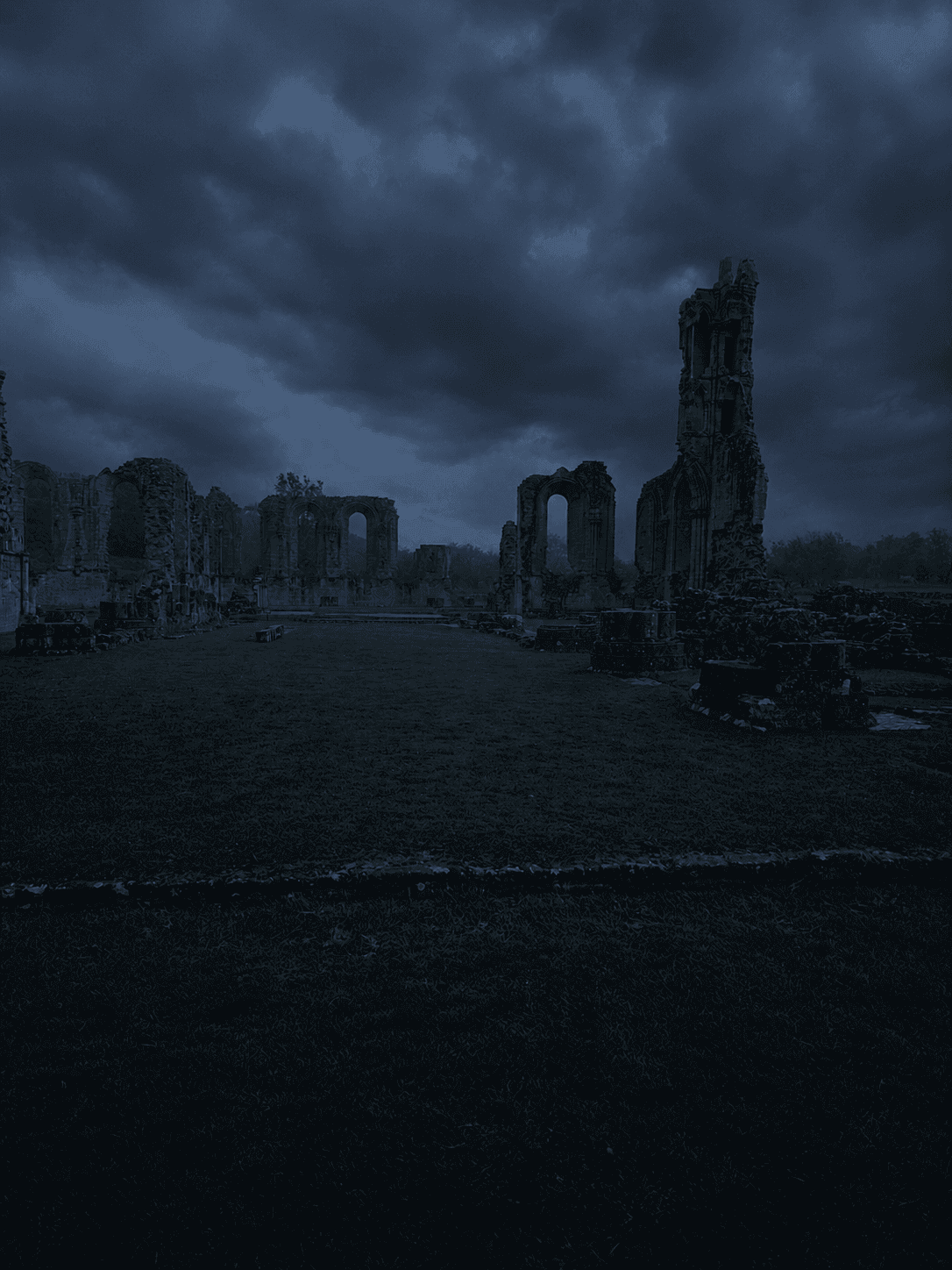
Yorkshire Ghost Tours: 5 Haunted Highways Where the Stories Beat the Scares
There is a certain point in the evening when Yorkshire starts to feel different.
The light drops behind the hills. The old roads empty. Ruined walls become silhouettes, and every bend seems to have a bit more history than it did in daylight.
That is when the stories come out.
A good Yorkshire ghost tour is not really about someone hiding behind a bush and shouting “boo”. You can get that at a horror attraction, usually with better lighting and a queue.
The best haunted places in Yorkshire are interesting because they are real places with real histories. The legends have grown around abbeys, churchyards, coaching roads, moorland tracks and coastal towns where people have been travelling, working and losing their way for centuries.
Here are five atmospheric stops and stories that show why the best ghost tours are about the journey as much as the scare.
1. Byland Abbey: where medieval ghost stories were written down
Byland Abbey is one of those places where you do not need to add much atmosphere. The ruins already do the work.
The former Cistercian abbey sits among the North York Moors landscape, with huge stone arches, open grass and the sort of quiet that makes you lower your voice without really deciding to.
What makes Byland especially interesting is that a monk connected with the abbey recorded a collection of twelve ghost stories around the year 1400. These are not modern tales created for Halloween. They belong to a much older world, when stories about restless dead, strange happenings and unexplained events were part of how people understood the places around them.
The stories are tied to local lanes, fields and villages near the abbey. That matters.
You are not just standing in a generic ruined building while somebody reads out a scary story. You are hearing tales connected with the same landscape outside the walls.
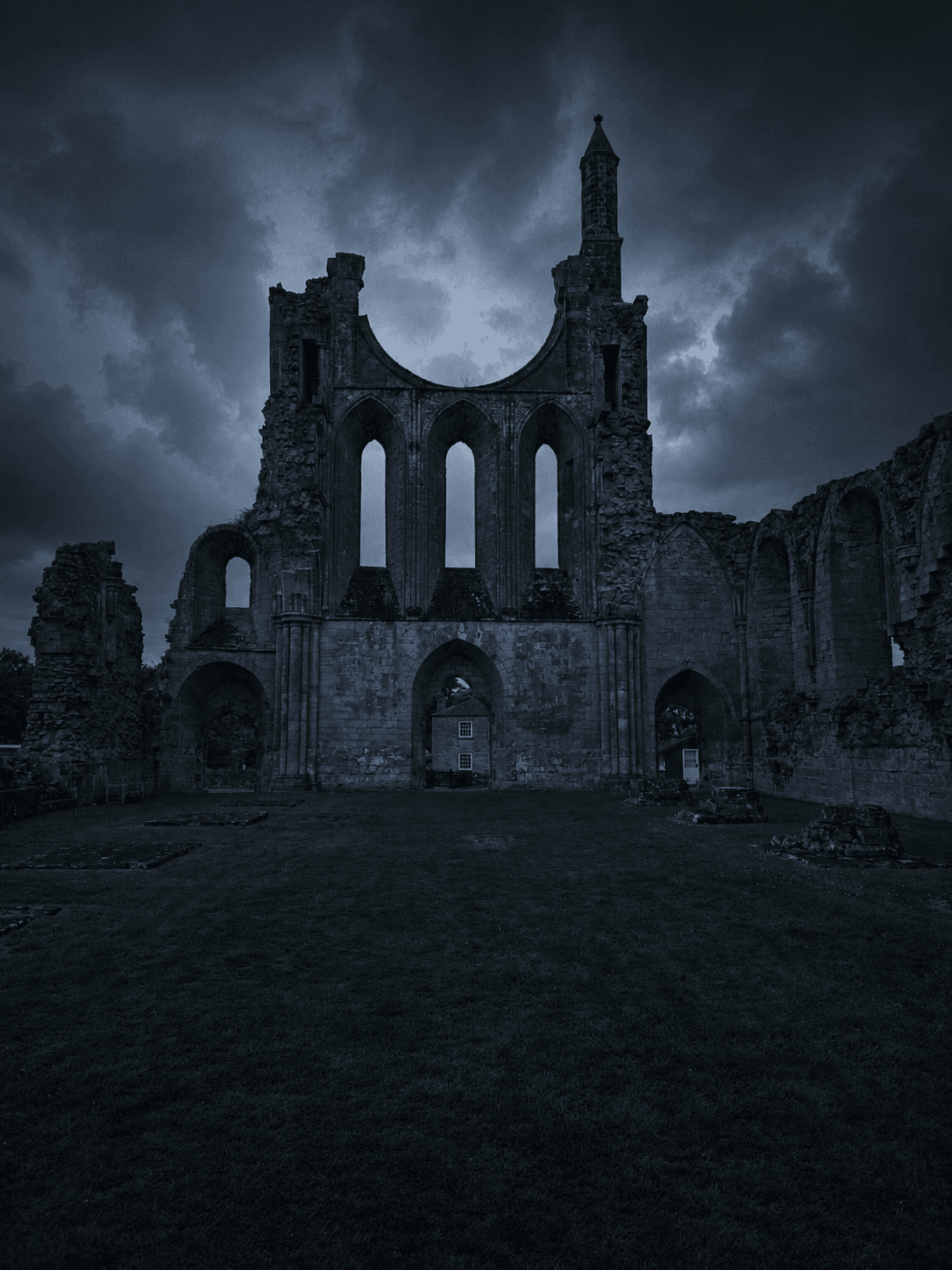
We use Byland as an example of what makes a proper Yorkshire ghost tour work. The interest comes from the age of the place, the people who lived there and the fact that somebody thought these stories were worth writing down six centuries ago.
Whether you believe in ghosts is almost beside the point.
The stories have survived because they say something about the people who told them.
2. The North York Moors: old roads, coffin paths and lonely miles
The North York Moors are crossed by old routeways, hollow ways and stone-paved tracks. Some are medieval, while others may follow much older lines of movement across the landscape.
For centuries, people used these routes to travel between villages, markets, farms and churches. Some remote communities also had to carry the dead to a church with the right to perform burials. Those paths became known in different places as corpse roads, coffin paths or church roads.
There is nothing theatrical about that history. A coffin being carried across open moorland was a practical necessity, often over difficult ground and in unpleasant weather.
But practical journeys tend to gather stories.
A quiet road across the heather, particularly one with an old name or a history of funerals, can feel unsettling after dark. Add low cloud, wind over the grass and the occasional glimpse of a farmhouse light, and your imagination gets involved without needing much encouragement.
Some old routes are also linked with packhorse journeys, coaching travel and drovers moving livestock across the hills. These were working roads, not picturesque lanes created for visitors. People travelled them because they had to.
That is part of their appeal now.
You are following the lines used by travellers who knew the moors in a very different way. They would have listened for approaching carts, watched the weather and worried about reaching the next settlement before nightfall. We get those too, only now the concern is usually whether the sat-nav has lost signal.
The moors are not haunted because every bend has a ghost attached to it. They are atmospheric because the landscape still feels large, exposed and slightly apart from the modern world.
That is enough.
3. Whitby: Dracula, shipwrecks and the road up to the abbey
Whitby is probably Yorkshire’s most recognisable Gothic setting, but its connection with the supernatural is more interesting than simply calling it spooky.
Bram Stoker visited Whitby in 1890. During his stay, he explored the harbour, saw the ruined abbey and churchyard above the town, and found the name “Dracula” in a book at the local library.
He also heard about the wreck of a Russian vessel called the Dmitry, which had run aground below the East Cliff several years earlier. That real shipwreck helped inspire the fictional Demeter in Dracula.
In the novel, the ship arrives in Whitby during a storm. The crew has disappeared, the captain is found tied to the wheel and a large dog runs from the wreck up towards the churchyard.
You can read more about the history in English Heritage’s account of how Dracula came to Whitby.
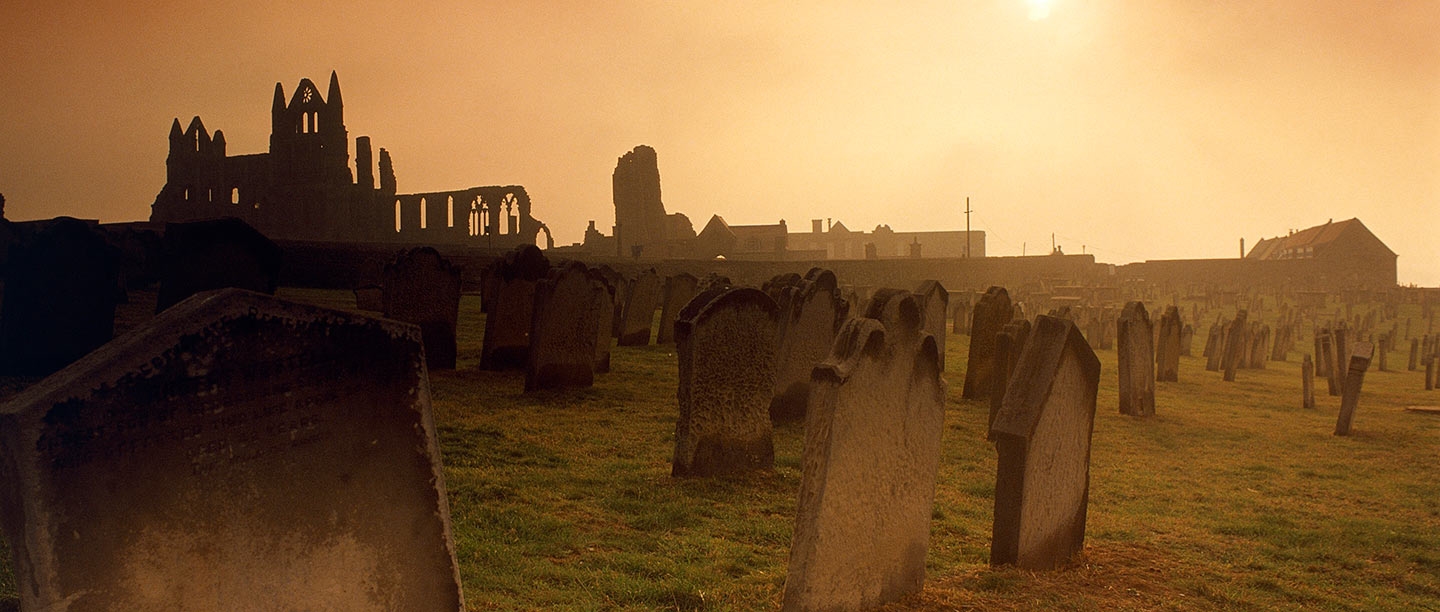
Then there are the 199 Steps.
They climb from the old town to St Mary’s Church and the abbey plateau. The steps were used by worshippers and funeral parties long before Whitby became associated with Dracula, which gives them their own weight of history.
The Gothic connection came later, but it fitted the place rather well.
On the other side of town, the Screaming Tunnel on Khyber Pass is another popular part of Whitby’s haunted reputation. Visitors have reported hearing screams, seeing shadowy figures or feeling something brush against them as they pass through.
Are all those reports supernatural? Honestly, nobody can prove that. Sound behaves oddly in narrow passages, and Whitby has plenty of wind, echoes and people ready to tell a good story.
But the tunnel, the abbey, the churchyard and the harbour all connect naturally. You are not jumping between unrelated scares. You are following one place through its history, literature and local folklore.
That is much more interesting.
4. Fountains Abbey: ruined stone and the sound of a phantom choir
Fountains Abbey is best known as one of Yorkshire’s great historic sites and part of the Studley Royal World Heritage Site.
It is also one of the county’s better-known haunted places.
Stories associated with the abbey include reports of a phantom choir in the Chapel of the Nine Altars. At Fountains Hall, there are tales of a woman connected with the house and an Elizabethan figure appearing from the wood panelling.
As with many historic ghost stories, these are best treated as traditions rather than proven events. The important thing is how closely the stories fit the setting.
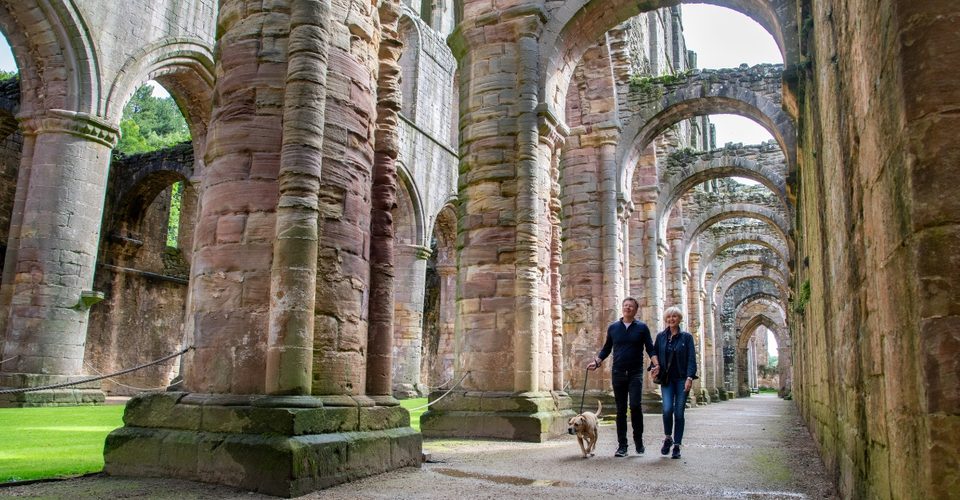
The abbey was a place of prayer, work, illness, death and dramatic change. Its ruined walls hold the shape of a community that disappeared centuries ago. When the light fades across the stone, it is easy to understand why people have imagined voices carrying through the buildings.
You do not need to claim that the choir is definitely there.
You can simply stand quietly for a moment and consider how many people once filled the place with sound. That is the difference between a story-led tour and a staged fright. One leaves room for you to make up your own mind.
5. Richmond Castle and the drummer boy’s lost route
The legend of the Drummer Boy’s Tunnel connects Richmond Castle with nearby Easby Abbey.
According to the story, soldiers discovered a narrow entrance beneath the castle keep and sent a young drummer boy into the passage with a lantern. They followed his progress from above by listening to the sound of his drum.
Then the drumming stopped.
The boy was never seen again. Some people say the sound can still be heard beneath the fields.
The tunnel itself has never been established as a straightforward route between the castle and the abbey, which is worth saying. Legends do not need an engineer’s report before they become part of a place’s identity.
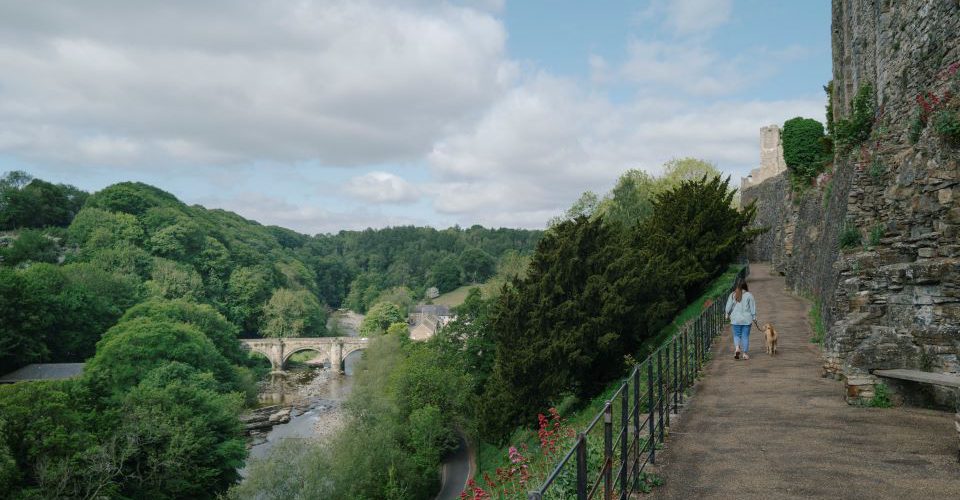
What makes this story work is the journey. Richmond Castle, the riverbank, the fields and Easby Abbey are all connected by the landscape. You can imagine the soldiers listening for the drum, trying to work out where the boy had gone and whether he was still moving.
The silence at the end is the frightening part.
Not a mask. Not a jump scare. Just a sound disappearing underground.
What makes a good Yorkshire ghost tour?
You do not need to spend the evening in a dark room being startled by an actor.
Instead, you could be out on the roads, travelling through proper Yorkshire countryside and hearing how the stories belong to the places around you.
A private tour also avoids a fair amount of faff:
- No strangers joining your group
- No fixed coach timetable
- No pressure to keep pace with a large party
- No need to drive unfamiliar moorland roads after dark
- No staged horror attraction unless that is specifically what you want
With Highwayman Tours’ private Haunted Highways tours, your group can include up to four guests. We focus on local legends, haunted sites, old roads and the history behind them.
The route can be shaped around what interests you. More abbeys? Fine. Coastal Gothic history? No problem. Moorland roads, old villages and strange local stories? We can look at what works.
Where availability allows, we can also adjust the pace around the weather, daylight and how your evening is unfolding. We cannot promise every date will be free, particularly around Halloween, but it is always worth asking.
If you would like to see how our seasonal evening route works, you can also read Haunted Yorkshire After Dark, which includes Byland Abbey, Helmsley, Castle Howard country and Sheriff Hutton.
The best Yorkshire ghost tours are not about proving anything.
They are about seeing old places properly, hearing the stories in the landscape where they belong and enjoying a real evening out without having to manage every road, turn and timetable yourself.
The stories beat the scares.
That is the whole point.
If you would like to plan a private Haunted Highways route for your group, send us a message and tell us what sort of places you want to explore. We will see what we can make work.
Kestrel, Highwayman Tours